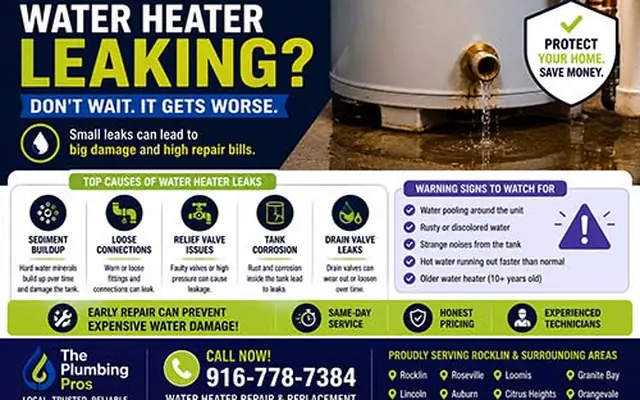
Inside every tank water heater there is a part most homeowners never hear about until it is used up. It is called the anode rod, and it is the main thing standing between your water and the steel tank.
What an anode rod does
A water heater tank is steel with a thin glass lining. Water is always looking for metal to corrode, and the lining never covers every seam perfectly. The anode rod is a long rod of magnesium or aluminum that hangs down inside the tank. Because that metal is more reactive than steel, the water attacks the rod first and leaves the tank alone. That is why plumbers call it a sacrificial anode.
The rod is meant to be eaten away. The trouble starts when there is nothing left of it. Once the anode is gone, the tank itself starts to corrode, and a tank that rusts through cannot be repaired.
When to replace it
We recommend replacing the anode rod at around six years for maximum life expectancy. A heater that gets a fresh anode on time can keep going well past the point where a neglected one fails. If your water heater is six years old and nobody has ever looked at the rod, now is the time.
Homes with a water softener should check sooner, since softened water tends to use up an anode faster.
Signs the anode needs attention
- Hot water that smells like rotten eggs, while the cold water smells fine
- Rusty or discolored hot water
- Popping or rumbling from the tank
- A heater that is six years old or more with no service history
Is it worth doing?
Usually, yes, as long as the tank is still sound. Replacing an anode costs far less than replacing a water heater. If the tank is already leaking or badly rusted, a new rod will not save it, and we will tell you that plainly.
Tankless water heaters do not have an anode rod. They need descaling instead.
Not sure how old yours is?
Check the label on the side of the tank for the install date, or use the How old is yours? slider. You can also text a photo of the label to (916) 778-7384 and Steve will tell you what you are looking at.